


Introduction
Weaning – it can be messy, fun, and stressful – often all at once! But helping your little one to love a wide range of healthy food is worth it. Most babies start solids at around 6 months, and they’ll show signs when they’re ready.1
However, introducing solids has its own challenges. From everyday weaning issues like spitting out food, to refusing it altogether, we’ve got plenty of weaning advice for parents. Like adults, babies have their own tastes and ways of doing things, and it can take time for them to find their flow – but don’t worry, your baby will get there when they’re ready.
What are the signs my baby is ready to start weaning?
As milestones go, weaning is a biggie! Are you ready? Maybe, maybe not – but your baby might be. Most babies are ready for solid food at around 6 months.2
Signs your baby is ready for weaning:
- They can sit up and hold their head steady – sitting with support and staying upright while feeding
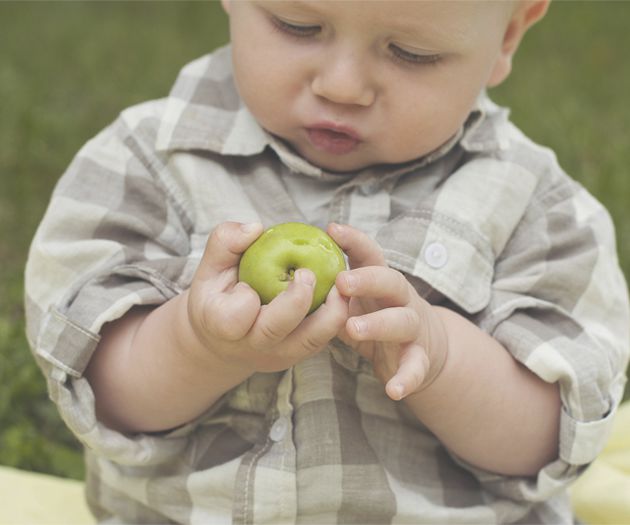
- They can pick up food and feed themselves – good hand-eye-mouth co-ordination
- They can swallow food instead of automatically pushing it back out3
Signs that look like they’re ready, but aren’t:
- Chewing their fists
- Waking more in the night
- Wanting extra milk feeds4
These are all totally normal baby behaviours, but they don’t mean your little one is ready for solids just yet.
Why is my baby refusing solid food?
Babies take time getting used to solid food. If you think about it, they’ve only drunk milk until now, and eating is a skill they need to learn. It’s important to take it slow and let your baby guide you.
If your baby’s refusing solids, it might be because:
- It’s early days and they’re more used to milk
- They’re not confident enough with new textures and tastes
- They’re not hungry enough – like adults, their appetites can vary from day to day
- They might be unwell – and have lost their appetite
- You’re offering them something new – and they’re wary
- They might be teething
- They may just be too tired to eat
If your baby turns their head away, keeps their mouth shut, is spitting out food or just holding it there, they’re probably not hungry. And if they’re pushing the spoon away, crying or trying to escape the highchair, that’s their way of saying “no thanks!”5
Babies refuse food sometimes – it’s totally normal. Don’t worry, it doesn’t mean your baby’s a fussy eater. You may just need to try again at a time when they’re not tired or overly hungry, and when you’re not rushing. Keep mealtimes short, calm and relaxed, and just see how things go.
How do I deal with gagging or choking during weaning?
A lot of babies gag when they start on solids – signs include watery eyes, retching, or pushing food back out. Gagging is a sign your baby is protecting their airway and clearing food from the back of their mouth. Gagging usually causes a noise. It can look dramatic, but gagging is a completely normal part of weaning. It usually gets better as your baby learns how to handle solid foods and grows more confident with chewing and swallowing.6
Choking is more serious. If your baby is choking, they won’t be able to breathe, cry, cough, or make any sound.7 The good news is, there are some simple steps you can take to reduce the risk.
Ways to reduce the risk of choking:
- Cut round food like grapes or cherry tomatoes into small pieces
- Soften harder fruit and veggies, like carrots and apples, by cooking them
- Skip whole nuts – smooth nut butters or ground nuts are fine
- Remove any pips, stones or bones before serving8
You might worry that finger foods are risky, but research shows baby-led weaning (only giving them food they can feed themselves) doesn’t actually increase the chance of choking. In fact, one study found that babies who weren’t used to finger foods were more likely to choke.9
Check out the NHS for advice on what to do if your baby starts choking.
What if my baby only wants milk and not solids?
Don’t worry, when solids are introduced at around 6 months, your baby will still get most of their energy and nutrients from breastmilk or formula10 – but beyond 6 months, a milk-only diet won’t provide everything they need.11
The best thing to do is to introduce solids gradually, starting with just a few teaspoons once a day. Your goal is more about getting your baby used to different tastes and textures, not about replacing milk. And prepare to be patient – it may take 10 attempts or more for your baby to get used to new foods, flavours and textures.12
Ways to encourage your baby to eat solid food:
- Let your them touch, pick up, and play with their food
- Allow them to feed themselves, using their fingers or let them hold a spoon while you feed them
- Show them how you eat or sit down together for family mealtimes
- Keep distractions at a minimum
The NHS says that breastmilk or formula should still be your baby’s main drink during the first year, even when solids are on the menu.
How can I introduce new textures without overwhelming my baby?
Soft and smooth to lumpy and chunky – with so many different textures to explore, it’s best to keep things simple when it comes to introducing them to your baby.
How to introduce new textures:
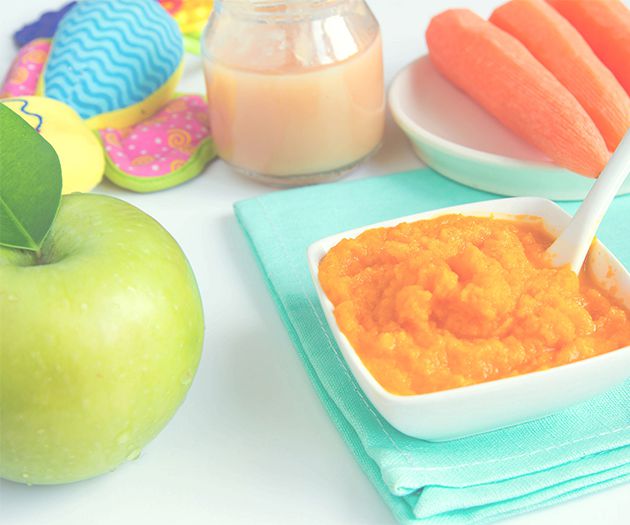
- Start with soft textures – smooth purées or lightly mashed foods, then gradually make them thicker or chunkier
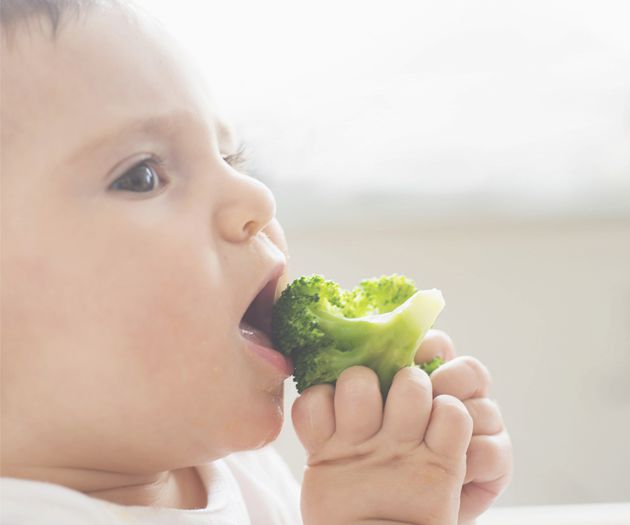
- Offer soft or mashed foods or well-cooked soft pieces – like cooked vegetables, soft fruits, or soft pieces of well-cooked food they can gum or chew easily
- Let your baby touch, hold and explore food – get them used to the different textures on their own terms
- Introduce a mix – like spoon-fed mashed foods with some soft finger foods – you may even find your baby prefers one method over the other
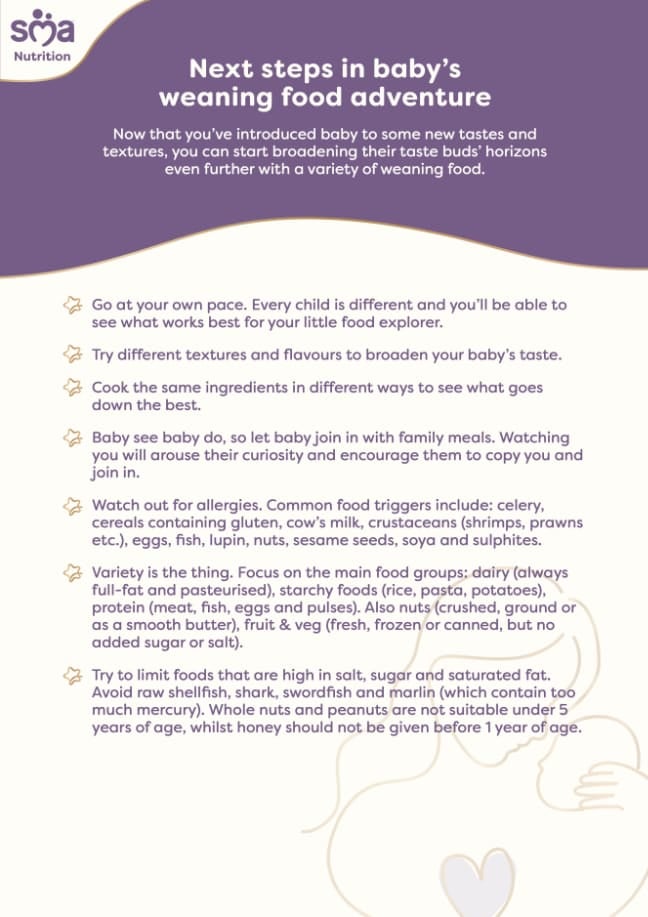
Follow our checklist for tips on how to broaden flavours and textures.

What if my baby spits out everything I offer?
You’ve spent ages preparing your little one’s food and… they spit it out! In fact, they’re spitting everything out. While that’s frustrating, and you may worry they’re not eating enough – it’s totally normal and a necessary part of them learning to eat.13 And, it doesn’t necessarily mean they dislike the food. The best way to help them is to stay calm, stay consistent, and keep giving them the freedom to explore different foods and tastes.
Things you can do to help:
- Check your baby is ready for weaning – are they showing signs? Maybe leave it a week or two and then try again
- Make sure they’re hungry – offer food around 1.5 to 2 hours after their last milk feed
- Show them how to do it – let your little one see you eating and enjoying different foods
- Let them explore at their own pace – a relaxed environment keeps everyone calm
- Offer small amounts of food in bite-size and easy-to-hold pieces – better for their tiny mouths and less overwhelming
Is it normal for my baby to eat very little during weaning?
Yes, don’t stress too much about the amount your little one is eating. Your main goal is helping them get used to eating and trying lots of different flavours and textures. Think variety over quantity – your baby will still be getting most of their energy and nutrients from breastmilk or formula.14
Think of it as offering them lots of little tastes to explore. As you gradually increase how much you give them, they’ll eventually be happily enjoying the same meals as the rest of the family.
How do I handle food allergies or sensitivities during weaning?
It’s natural to worry about allergies when you start weaning but unless your baby is high risk for allergies, you don’t need to stay clear of potential allergens. Just introduce them slowly – one at a time, in a suitable texture and in small quantities – so it’s easier to spot a reaction.15
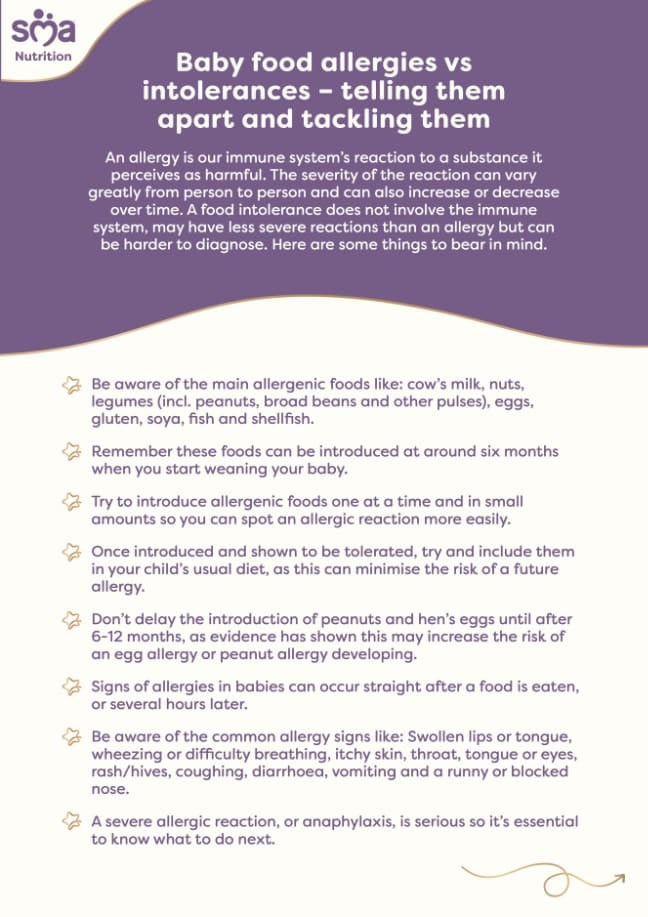
Read our handy checklist on allergies and intolerances and how to tell them apart.
If your baby already has an allergy, such as a diagnosed food allergy or eczema, or allergies run in your family, chat to your GP or health visitor first.16
Foods that can trigger an allergic reaction include:
- Cows’ milk
- Eggs (eggs without a red lion stamp should not be eaten raw or lightly cooked)
- Foods containing gluten
- Tree nuts (serve finely ground or as nut butters)
- Soya
- Shellfish (do not serve raw or lightly cooked)
- Fish
- Celery
- Sesame (found in tahini and houmous)
- Mustard
- Sulphur dioxide (sometimes found in dried fruits and fruit juices)17
Research shows that waiting too long to introduce peanuts or hens’ eggs – especially beyond 6 to 12 months – may actually increase the chance of your little one developing an allergy to them.18
Allergic reactions usually appear quite quickly, often within minutes, so it’s good to know what signs to look out for.
Allergies can cause:
- Sneezing
- A runny or blocked nose
- Red, itchy, watery eyes
- Wheezing and coughing
- A red, itchy rash
- Worsening of asthma or eczema symptoms
- Feeling or being sick
- Tummy pain, diarrhoea or constipation19
Most allergic reactions tend to be on the mild side, but very occasionally a more serious reaction – called anaphylaxis – can happen. This might look like swelling around the lips and face or trouble breathing, and you should immediately call 999 for an ambulance.20
It can be tempting to cut out big food groups, like milk, just in case, but doing that without guidance can mean your little one misses out on important nutrients. If you’re worried, chat with your health visitor or GP first.21 To find out more about allergies in babies read out article.
“Starting weaning has been a real mix of fun and figuring things out. Some days my baby gets really into it, and other days they’re more interested in squishing the food than eating it. I’m learning to take the wins where they come, keep things relaxed, and enjoy watching them explore — even if most of it ends up everywhere but their mouth!”
What if my baby prefers finger foods over purées?
If your baby prefers finger foods, that’s perfectly fine. Some parents start with finger foods and skip purées altogether – this is known as baby-led weaning. Others use a mix of purées and finger foods.
Every baby is different, and so are their tastes, so let them lead the way. As long as they’re still getting breastmilk or formula as their main drink during the first year,22 and enjoying a varied and healthy diet, the best way to eat is what works for them.
How can I make mealtimes less stressful for both of us?
Weaning can be tricky, but there are things you can do to help make mealtimes calm and more relaxed for both of you.
- Take it slow – give yourself plenty of time so you and your baby don’t feel rushed. Keep mealtimes short and stop when they’re full.
- Go with the flow – your baby might pick up some habits quicker than others – let them lead the way.
- Expect ups and downs – some days they’ll eat lots, and on others they’ll barely take a bite – don’t worry, it’s totally normal.
- Keep offering new tastes – even if your little one doesn’t love something at first, keep giving them a variety of foods – they might surprise you. Changing how you serve a food may make it more appealing, e.g. they dislike cooked carrot but love it raw and grated.
- Take a break – if your baby isn’t ready, having a bad day, or feeling unwell, it can make mealtimes extra challenging. Maybe take a short break and try again when they’re feeling better.
When should I seek professional help for weaning issues?
- You’re worried about your baby’s eating
- You’re worried about their growth or weight
- Your baby often gags, chokes or has trouble swallowing
- You suspect they may have a food allergy
- Your baby was premature or has a medical condition and might need extra support

Author
Ellie Grove
Registered Dietitian, SMA® Nutrition UK&I
Ellie is a registered Dietitian and has a First Class BSc (Hons) degree in Nutrition and Dietetics from Surrey University.
She’s one of our lead health writers in the medical affairs team and specialises in baby feeding issues and specialist products.
She has a keen eye for rigorous research and enjoys dissecting health-related science and making it accessible and applicable to everyone.
Share on