


Introduction
Did you know, babies can get hiccups in the womb,1 so it’s not a surprise they still get them once they’re born? Hiccups in newborns are totally normal and usually nothing to worry about. Most babies aren’t bothered by them – their breathing isn’t affected and they can even sleep through them.2
You may wonder how to get rid of hiccups, but there’s no quick fix. They usually settle on their own after a few minutes. If your little one suffers from them often, there are things you can do to help prevent or ease them, but most of the time, you just need to let them run their course.
Why do babies get hiccups?
Hiccups happen when your baby’s diaphragm – the tiny muscle that helps them breathe – suddenly and involuntarily contracts (spasms), producing the familiar ‘hic’ sound.3 The same thing happens in adults.
There’s no one cause for baby hiccups, but they often show up around feeding time, especially if your baby eats too fast or swallows some extra air. Sometimes reflux can be the cause, but most of the time hiccups just pass on their own.
Can hiccups be a sign of something serious?
Baby hiccups are very common, settle on their own, and are a part of your baby’s growth and development.
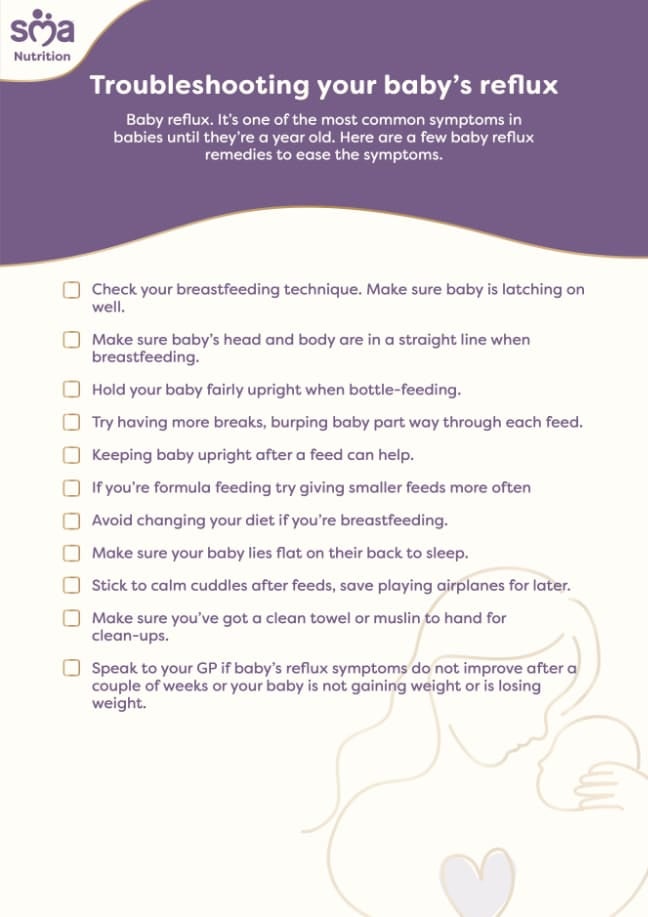
Occasionally, persistent hiccups in babies can be linked to reflux – when milk travels back up the food pipe. Reflux is common in babies over 2 months old and usually improves by the time they reach their first birthday. If you think your little one’s hiccups might be reflux, try burping them more often throughout each feed. Keeping them upright during feeds may also help. If you’re breastfeeding, you may find adjusting your position makes a difference.4
Check our helpful guide to reflux.
If you’re worried about your baby’s hiccups, chat to your health visitor or GP.
How can I help my baby when they have hiccups?
Your baby’s hiccups should only last for a few minutes and usually disappear on their own. There are no magic tips for getting rid of them, but there are some things you can do to help ease them.
Things to help ease your baby’s hiccups:
- Burp it out – try burping them, in case of any trapped wind
- Keep your baby upright – hold them close against your chest to help relax their diaphragm
- Offer a slow feed – if they’re hungry, feed them – sometimes swallowing can help settle hiccups
- Offer a dummy – sucking can help relax their diaphragm
- Stay calm – a relaxed environment can help settle them
- Pause feeding – if they begin to hiccup mid-feed, take a short break and restart slowly
- Ask for advice – if you’re worried about your baby’s hiccups, ask your GP or health visitor for advice5
Should I feed my baby if they have hiccups?
If your baby has hiccups and is due a feed, you can wait until their hiccups pass. However, if they’re getting restless and their hiccups don’t seem to be bothering them, it should be fine to feed them as normal.
Feeding tips that may help:
- Slowing down the feed or taking short pauses can help your baby swallow less air
- Burping them mid-feed and again afterwards
- Keeping your baby upright for a little while after feeding
- Making sure the bottle teat or your baby’s latch isn’t letting in extra air
Do hiccups bother babies?
Some babies can get hiccups several times a day, while others get them once in a while. Either way, if your little one seems happy and content, there’s usually no need to worry. Their hiccups should stop on their own without any help.
If your baby seems bothered by hiccups and they’re arching their back, crying when feeding, or showing other signs of discomfort or distress, you should contact your GP.

Can I prevent baby hiccups?
Hiccups are a natural part of your baby’s growth and development. If you’re wondering how to prevent hiccups in your newborn, there are definitely things you can do to reduce the chance of them getting them – but you can’t prevent them completely.
Things that can reduce the chance of hiccups:
- Taking things slow – slow down feeds or take short pauses so your baby doesn’t fill up too quickly or overfeed
- Keeping them upright – hold your baby in a more upright position during feeds and for a short while afterwards – this can stop them from swallowing extra air
- Taking burp breaks – burp your baby mid-feed and again afterwards
- Latch check – if you’re breastfeeding, check your baby’s latch isn’t letting in extra air
- Teat check – if you’re bottle-feeding, check the teats aren’t flowing too fast or too slow, both of which can cause your baby to swallow extra air
- Keeping things calm – avoid overstimulating your baby straight after a feed, like bouncing them up and down
How do I stop baby hiccups?
If your baby has hiccups, the first thing is not to worry. They’re completely normal, shouldn’t last for more than a few minutes, and will stop on their own – with no need for any help.
What NOT to do:
- You DON’T need to intervene – the hiccups should stop their own
- DON’T startle or scare your baby
- DON’T put a wet cloth on their forehead
- DON’T raise the head of your baby’s cot or Moses basket6
- NEVER try and make your baby hold their breath – it’s dangerous
- Over-the-counter remedies like gripe water AREN’T proven to stop hiccups7
The best approach is to relax and wait it out – they’ll be gone before you know it.
“My baby seemed to get hiccups all the time, and at first I worried something was wrong. But even on the days when they felt constant, they never seemed to bother my little one at all — just me! Over time I learned to relax, take things slow during feeds, and trust that hiccups really do pass on their own.”
Do hiccups mean my baby is full or gassy?
Sometimes hiccups can be a sign your baby is full or has swallowed a little extra air (aka gassy), but it doesn’t always mean that’s the case. If you think that it might be, burping your baby and keeping them upright for a little while can help release any trapped air. But if your baby seems happy and comfortable, there should be nothing to worry about – hiccups usually stop on their own.
Are hiccups different in breastfed vs bottle-fed babies?
Hiccups are hiccups – and they happen whether your baby is breastfed or bottle-fed. It usually comes down to things like how fast your baby feeds, and how much air they swallow.
With a bottle, milk can flow more quickly and consistently with less effort than from the breast, where your baby has to work a little harder and can control their own pace8. This means a bottle-fed baby might swallow a little extra air or become full faster. If this happens, make sure you’re using the right-sized teat, or try paced feeding to slow things down.
For breastfed babies, frequent hiccups can sometimes mean they’re taking in some extra air. Checking your baby has a good latch and experimenting with different breastfeeding positions can help reduce air intake and prevent hiccups.
When should I contact my GP?
Hiccups are common in babies and are usually nothing to worry about. But if you have any concerns, reach out to your health visitor or GP for advice.
Contact your GP or health visitor if your baby:
- Is also suffering with reflux symptoms
- Has breathing problems due to hiccupping
- Is refusing feeds or you have concerns over their feeding or weight
- Is hiccupping for longer than an hour9

Midwife Live Chat
As part of our commitment to supporting you on your parenting journey, we’ve partnered with Epical Global to give SMA® Baby Club members access to trusted expert support. You can chat live with a team of expert midwives, available every day from 10am–8pm, to help answer your questions. We’ve also expanded this support to include a dedicated health visitor every Monday from 10am–2pm, and an expert dietitian from Monday to Thursday, 12pm–4pm.

Author
Ellie Grove
Registered Dietitian, SMA® Nutrition UK&I
Ellie is a registered Dietitian and has a First Class BSc (Hons) degree in Nutrition and Dietetics from Surrey University.
She’s one of our lead health writers in the medical affairs team and specialises in baby feeding issues and specialist products.
She has a keen eye for rigorous research and enjoys dissecting health-related science and making it accessible and applicable to everyone.
Share on