



Introduction
Welcome to the world of antenatal care! Becoming a new parent can bring a mix of excitement, nerves, and plenty of surprises – often all at once.
Fortunately, there are lots of maternity appointments, antenatal classes, and scans to help you and your partner prepare, make sense of everything, and ask all the questions you need before your little one arrives.
And while your partner may be centre stage, there are many ways you can support them and get ready for the big day together – helping you both feel confident for the journey ahead.
How can I support my partner during pregnancy?
You can make a world of difference by getting involved and supporting each other in simple, meaningful ways.
You can:
- Prepare together – attend antenatal appointments, pack your hospital bags, and plan your route to the hospital, or check the plan with your midwife if you’re having a home birth
- Stay organised – keep important phone numbers handy, fuel/charge in the car, and sort out benefits, parental leave, and childcare vouchers early
- Keep each other healthy – enjoy gentle exercise, eat well together, and remind your partner to take their vitamin D and folic acid supplements1
- Be informed and proactive – encourage your partner to speak to their midwife or GP about any worries, and consider joining an online baby club, like the SMA® Baby Club to receive personalised emails about each stage of your pregnancy journey2
“I don’t always know the right thing to say or do, but I really want to be there for her. Pregnancy can feel overwhelming at times, and I’m just trying to be present — go to the appointments, listen, help where I can — and make sure she knows we’re in this together.”
What to expect at antenatal classes
Antenatal classes aren’t just about labour and delivery – they’re a great way to meet other parents expecting babies around the same time as you, ask questions, and squash any worries.
NHS classes: These are free of charge, cover the essentials, and are led by a midwife or healthcare professional. You’ll learn what to expect throughout your pregnancy and post-birth and meet other parents-to-be in your area.3 You can sign up to these via your midwife, GP, or local hospital.
Private classes (like NCT): You pay for these, the sessions may be longer, and they’re more interactive, covering the basics, plus extra tips. They’re also a fantastic way to build a postnatal support network with other parents-to-be in your area.4 You can sign up to these at https://www.nct.org.uk
Most antenatal classes start when your partner is around 30 to 32 weeks pregnant. And if you’re expecting twins, at around 24 weeks pregnant.5 Whichever classes you choose, it’s best to sign up early, so you get the dates you want.

What to expect at midwife & antenatal appointments
Your partner will have regular check-ups throughout their pregnancy to make sure both they and your baby are happy and healthy. These will include routine antenatal appointments with a midwife or healthcare professional, scans to check your baby’s growth and development, and a chance to ask questions, get advice, and prepare for labour and life after birth.
The number of appointments your partner has will depend on whether it’s their first baby, but you can expect plenty of support at every step. Check out our antenatal article for a more detailed breakdown.
Many partners find it helpful to attend appointments but it’s down to personal choice. You’re entitled to take unpaid time off work to go with your partner to up to two antenatal appointments,6 giving you the chance to be part of the journey.
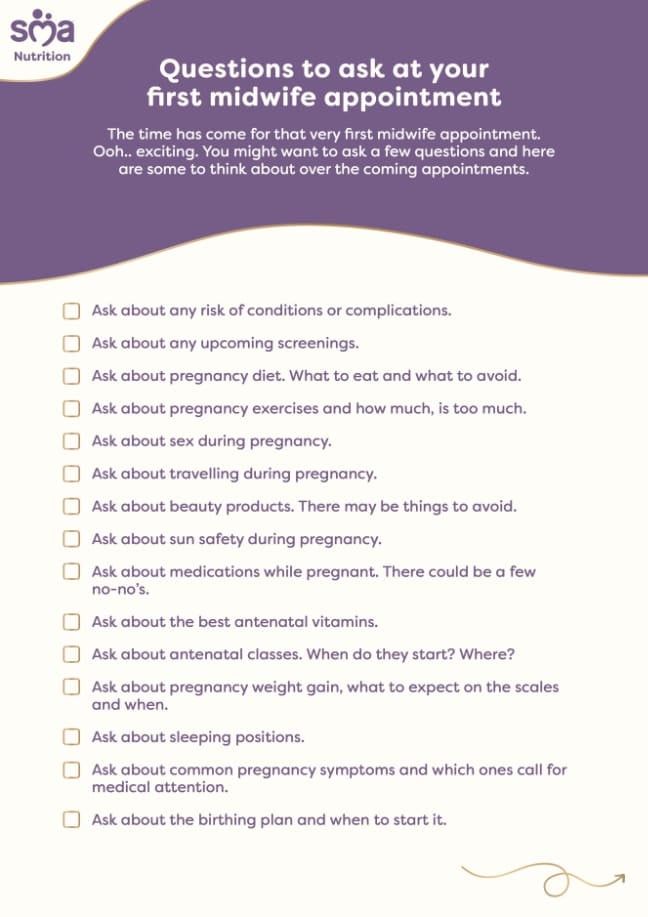
What questions should I ask at antenatal appointments?
You can ask your midwife anything to do with your partner’s pregnancy and birth. As well as looking after your partner and baby, they’re there to guide you both along the way.
You might find it helpful to ask about things like mental health support, parental benefits, and what to do if your partner is worried something isn’t right. You may also find it helpful to write down a list of questions to take with you or make notes during your visit, so you don’t forget.
For an idea of questions to ask at your antenatal appointment, why not read our helpful midwife appointment checklist below or download and take it with you?
What emotional support can I offer during pregnancy?
Sometimes the best support is simply being there – although hugs and kind words can mean a lot too.
Ask your partner how they’re feeling, listen to them, stay informed, encourage them to see their midwife or GP if they’re feeling worried, and make them feel cared for.
How can I bond with my baby before birth?
Although you can’t hold your baby – yet – there are ways to feel more connected. Bonding takes time but there are many things you can do before they’re born:
- Let them hear your voice – regularly talking, singing or reading to your partner’s bump is a lovely way to bond – did you know your baby can hear from around 16 weeks, maybe even earlier?7
- Imagine the future – take some time with your partner to think about what your baby will look like, be like, and what you’re most looking forward to sharing with them. Chat about names, room décor, your roles when they arrive – it’ll all help.
- Do your homework – go to antenatal classes, be at the scans, read up on the age stage they’re at – are they the size of an avocado (around 16 weeks), or are they now a grapefruit (around 23 weeks)?8
What if I feel left out during pregnancy?
It’s understandable to feel left out during pregnancy – especially with so much focus on your partner. Remember, your feelings are valid. Try sharing how you feel with your partner calmly and openly – with so much happening, they may not realise how you’re feeling.
Doing more things together, like attending maternity appointments, scans, and antenatal classes, can help you feel more involved. Antenatal classes are also a great way to meet other parents-to-be who are at a similar stage, including partners who may be experiencing similar feelings.
The most important thing is to be open and honest with each other or share your thoughts with a close friend or family member. And if you need extra support, speak to your midwife or GP.9
Are there antenatal resources specifically for dads and partners?
Yes, there are many resources designed just for dads and partners – or that actively welcome their involvement.
They include:
- DadPad® – this app is a guide for new dads, developed with dads and the NHS. Learn the basics of baby care and other key skills, find out about local and national support groups, and connect and ask questions with other local dads and healthcare professionals.10
- Tommy’s – the pregnancy and baby charity has a dedicated hub of advice and online articles for dads, partners and non-birthing parents.
- Healthier Together – run by the NHS, the Healthier Together programme offers both practical and emotional support, creating a sense of community among dads and non-birthing partners.
- Antenatal Classes – the NHS, NCT and Bump and Baby Club are all popular choices. These courses are open to partners and are designed to include both parents in the pregnancy.

Midwife live chat
As part of our commitment to supporting you on your parenting journey, we’ve partnered with Epical Global to give SMA® Baby Club members access to trusted expert support. You can chat live with a team of expert midwives, available every day from 10am–8pm, to help answer your questions. We’ve also expanded this support to include a dedicated health visitor every Monday from 10am–2pm, and an expert dietitian from Monday to Thursday, 12pm–4pm.

Author
Maya Lisboa
Midwife & Registered Nurse
Maya is a registered nurse and midwife with more than five years of experience working across a range of specialisms, including human rights, Indigenous health, and sexual and reproductive health and rights. Her diverse professional background has provided her with a strong foundation for supporting individuals and communities through compassionate, person-centred care.
Share on