


Introduction
In the early months, your baby’s digestive system is still developing1. That means it’s normal for feeding, poo, wind and settling patterns to change as their gut develops and grows.
This guide explains the signs that your baby’s gut health is developing normally. It also covers common changes like reflux, crying and poo changes, so you can feel informed without feeling overwhelmed.
If you want to understand how gut development begins before birth, you may also like our guide to Gut health during pregnancy.
What does healthy baby gut development look like?
Your baby’s gut microbiome is the enormous community of tiny organisms that live in the digestive tract and help support digestion, nutrient absorption and immune development1. In early life, this system is still taking shape. The gut microbiome is widely recognised as an important part of overall health, with early development influenced by feeding, environment and everyday care.
Healthy development does not look the same for every baby. It often shows up in small, everyday ways, such as:
- Regular feeding and good interest in feeds
- Wet nappies
- Steady growth
- Poo that changes in line with feeding development from milk to solids
- Wind, tummy noises and hiccups that come and go
- Periods of crying that can usually be soothed in familiar ways
In other words, gut health is less about one perfect pattern and more about a baby whose digestion is gradually finding its rhythm.
What are the signs my baby’s digestion is developing well?
Poo changes that fit a normal pattern2
Did you know, your baby’s nappies can tell you a lot about their digestion. In the first few days, the first poo, called meconium3, is usually sticky and dark green or black. After that, poo tends to change as milk feeding becomes established, and different patterns emerge depending on feeding;
- Breastfed babies often have soft, loose, yellowy stools. It may have small “seeds” in it.
- Formula-fed babies often have poo that is a little firmer, darker and smellier than breastfed poo.
- Mixed-fed babies may show a mix of these patterns.
You might also see a change in your little one’s poo if you move from exclusive breastfeeding to infant formula, with poos becoming darker and pastier. This change is completely natural, as your baby’s tummy adjusts. Don’t be alarmed if you notice a colour change once you start weaning4 – this is just a sign of your baby’s digestive system maturing.
Tummy noises and wind
A gurgling tummy, passing wind and hiccups are all normal signs of an active digestive system. These sounds simply mean your baby’s stomach and intestines are busy digesting milk.
A baby’s digestive tract is still maturing, so these noises are often just part of normal development rather than a sign that something is wrong.
Feeding and fullness cues
A baby who shows interest in feeding and signals when they are full is demonstrating a healthy connection between their gut and brain. Following their lead, whether they are breastfeeding or formula-fed, supports their natural digestive rhythm1.
Responsive feeding also helps babies learn to stop when they are full, which can support comfortable digestion over time.

What is reflux, and is it a signal of gut health?
Often referred to as ‘spitting up’, reflux is a normal part of the feeding process that affects around 80% of babies under two months old5. In many babies, it is usually a normal sign that the digestive system is still maturing. The muscle at the base of the food pipe (the lower oesophageal sphincter) is still developing, so it cannot always stay fully closed.
Reflux is common, affecting at least 80% of infants, and often improves as the digestive tract gains strength and coordination6. In most babies, it settles naturally as gut development continues.
How reflux fits into healthy digestive development
From a gut health point of view, reflux is often part of the wider picture of early digestive maturation. It tells us that the stomach, food pipe and digestive muscles are still learning to work together efficiently.
That is why reflux is usually viewed as a developmental issue rather than a sign that something is wrong. If your baby is feeding, growing and producing regular wet nappies, reflux alone does not usually mean there is a gut health problem.
Could crying mean colic?
Crying is your baby’s way of communicating that they need something, and sometimes even after feeding, changing or cuddling, they may still seem unsettled. That can feel worrying, but colic is a common stage in early infancy and, for many babies, it eases with time.
What could colic mean for gut health?
Colic is thought to be linked to the gut-brain axis, which is the developing connection between your baby’s digestive system and their brain. During this early stage, the gut is still maturing, and the balance of gut bacteria is still developing too. Research suggests that probiotics and prebiotics may help support a healthy gut environment7, which is why they are often discussed in relation to baby gut health.
If your baby does seem to have colic, you may notice prolonged crying, clenching of their fists or pulling up of their knees8. Even though it can be upsetting, it does not mean that anything is necessarily wrong.
What is the difference between lactose intolerance and milk allergy, and why does it matter for gut health?
Lactose intolerance and cows’ milk protein allergy (CMPA) can both affect your baby’s digestion, but they are different conditions and they affect the gut in different ways. Lactose intolerance in babies is extremely rare.
With lactose intolerance, the digestive system has difficulty breaking down lactose, the natural sugar in milk8. This can lead to symptoms such as wind, bloating, tummy discomfort and diarrhoea.
With CMPA, the body’s immune system reacts to milk protein. This can affect the gut, and sometimes the skin or breathing too9. Symptoms may include vomiting, diarrhoea, eczema, hives, blood or mucus in the stools, or skin rashes.
From a gut health point of view, the difference matters because it helps you and your healthcare professional understand whether your baby may need support with digesting milk sugar or whether their immune system is reacting to milk protein. If you are concerned, it is always best to speak to your GP, health visitor or another healthcare professional before making any changes. They can help you work out what is going on and what will best support your baby’s digestion and comfort.
Tracking your baby’s digestive development
Getting to know your baby’s digestive rhythm can help reassure you that the changes you are seeing aren’t anything to worry about - they are just a part of everyday life. It can help you spot what feels normal for your baby, notice how they respond to feeds, and feel more confident about supporting their gut health as they grow.
You might find it helpful to:
- Notice their usual poo pattern — how often they open their bowels, what the colour looks like and whether the consistency changes over time
- Keep an eye on feeds — whether they feed happily, seem unsettled during or after feeds, or appear to take in less than usual
- Watch for patterns with spit-up — for example, whether it happens more after feeds or when they are lying down
- Notice how they settle — how quickly they calm after feeds, nappy changes or cuddles
Look at the bigger picture — steady growth, wet nappies, feeding well and regular settling are often more useful than any one moment on its own. This can help you learn your baby’s patterns, recognise their usual rhythms and help you feel more prepared to speak to a healthcare professional if something does seem different.
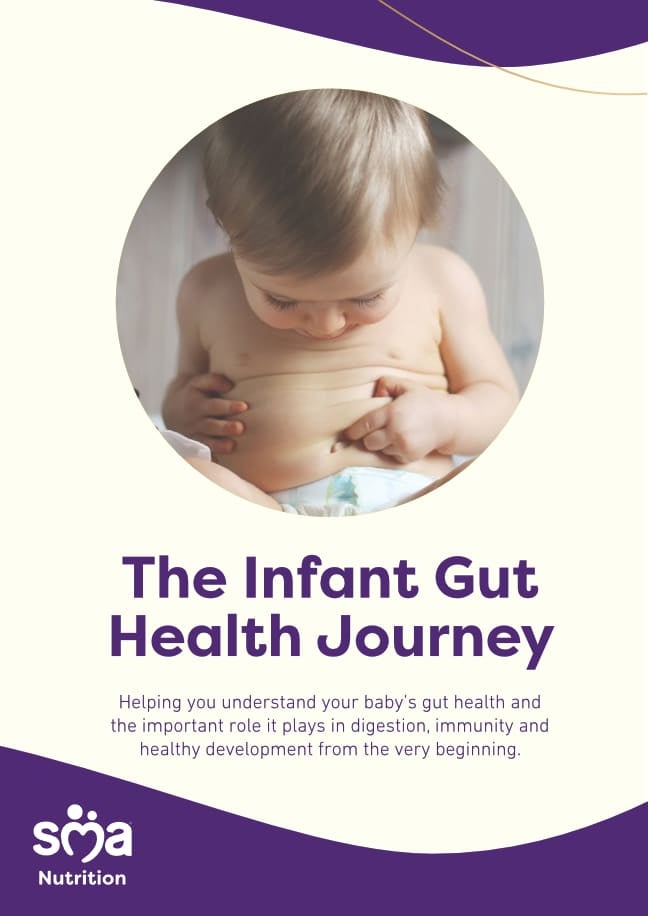
SMA® Nutrition have put together a handy guide to help simplify the science and to provide practical advice to support gut health in early childhood.
When to speak to a healthcare professional?
Most early digestive signs are part of normal gut development, but speak to a healthcare professional if you notice:
- Poor weight gain
- Persistent diarrhoea or constipation
- Repeated large vomits or frequent reflux that seems to affect feeding
- Blood in your baby’s poo
- Skin rashes, wheezing or swelling after feeds
- Ongoing crying or discomfort that does not settle
These can sometimes point to a digestive or allergy-related issue that needs further assessment.

Midwife Live Chat
As part of our commitment to supporting you on your parenting journey, we’ve partnered with Epical Global to give SMA® Baby Club members access to trusted expert support. You can chat live with a team of expert midwives, available every day from 10am–8pm, to help answer your questions. We’ve also expanded this support to include a dedicated health visitor every Monday from 10am–2pm, and an expert dietitian from Monday to Thursday, 12pm–4pm.

Author
Sophie Mumby
Registered Dietitian
Sophie is a Registered Dietitian with over 10 years experience working across NHS and private practice. She has a first class honours undergraduate masters degree in Nutrition and Dietetics and a post graduate certificate in eating disorders.
Share on