

Introduction
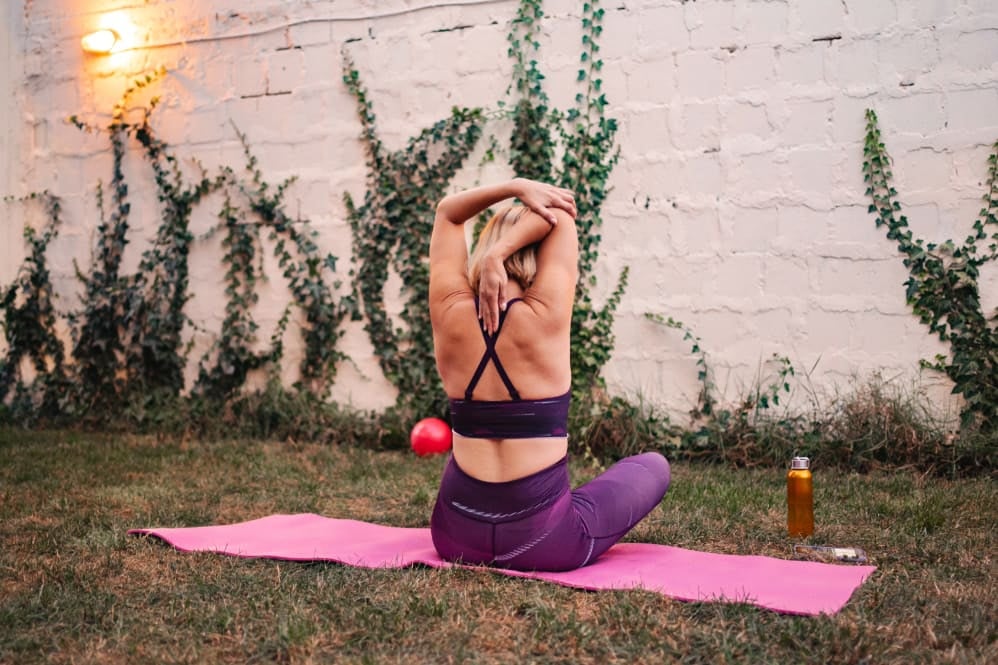
If you've recently had a baby, you've probably come across conflicting advice about exercise. Some sources use phrases such as "bounce back" suggesting you should strive to regain your pre-baby body quickly, others suggest the six-week check is the marker for postpartum exercise, but make no mention of the rehabilitation phase that is necessary before returning to pre-pregnancy level of exercise and others are overly cautious, leaving mothers feeling anxious about causing ‘damage’ if they exercise.
When Is your body ready for exercise after birth?
As a pelvic health physiotherapist, I want women to know that recovery after birth is about far more than reaching a certain date on the calendar. Whether you've had a vaginal birth or a Caesarean birth, your body has undergone enormous physical changes, and the return to exercise should reflect that. Similarly, exercise doesn’t have to mean high intensity workouts, and reframing the word to mean “gentle movement that supports your recovery” means that many people who have experienced an uncomplicated pregnancy and birth can begin much earlier than 6 weeks.
The goal isn't to get back to where you were before pregnancy as quickly as possible. The goal is to build a strong foundation that supports your long-term health, fitness and wellbeing, avoiding injury now and in the future.
Postpartum healing after birth: what happens in the first few months
One of the biggest misconceptions about postpartum recovery is that everything is healed by six weeks. In reality, recovery continues for months. Following birth, your body is healing muscles, connective tissues, nerves and pelvic floor structures while simultaneously adapting to sleep deprivation, hormonal changes and the demands of caring for a newborn.
For women who have had a Caesarean birth, multiple layers of tissue are healing, including skin, fascia, abdominal muscles and the uterus itself. Research suggests that many postpartum symptoms can persist well beyond the traditional six-week recovery period, highlighting the need for a gradual and individualised approach to exercise.
Pelvic floor recovery after birth: Signs you're not ready for high-impact exercise
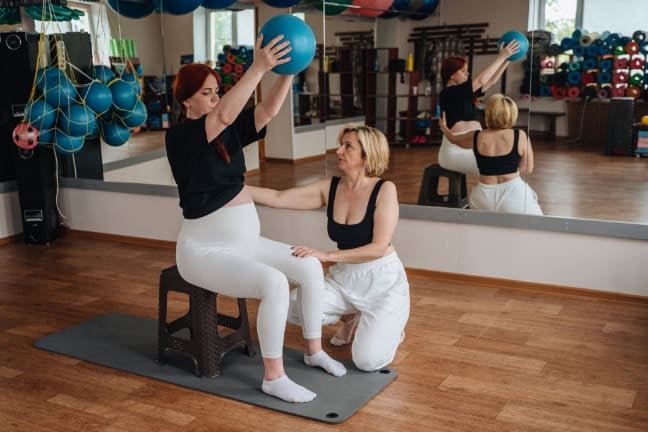
Regardless of how your baby was born, your pelvic floor has experienced significant stress during pregnancy.
During pregnancy alone, the pelvic floor supports increasing loads from the growing baby, placenta and uterus. Hormonal changes also alter connective tissue properties in preparation for birth.
Studies estimate that up to one in three women experience urinary incontinence after childbirth, while pelvic organ prolapse symptoms are also common during the postpartum period. This isn’t always something that happens immediately after birth, so it’s important not to assume that you’re ready to return to fitness just because you’re not feeling symptoms.
The challenge is that many women assume symptoms such as leaking, heaviness or pelvic pressure are simply a normal part of motherhood. While common, these symptoms should not be ignored.
Signs your body may not be ready for higher-impact exercise include:
- Leaking urine
- Pelvic heaviness or dragging sensations
- Pelvic pain
- Persistent lower back pain
- Difficulty controlling abdominal pressure
- Vaginal bulging sensations
These symptoms are often signs that your body needs more recovery and rehabilitation before progressing exercise intensity.
Diastasis recti after pregnancy: Why abdominal function matters more than the gap
What is diastasis recti? - Diastasis recti refers to the separation of the rectus abdominis muscles (commonly known as the “six-pack” muscles) along the linea alba, the band of connective tissue that runs down the middle of your abdomen, during pregnancy. As your baby grows, this connective tissue stretches to accommodate the expanding uterus, which can create a gap between the left and right sides of the abdominal muscles.
Research suggests that almost all women develop some degree of abdominal separation during late pregnancy, and many still have a measurable separation months after birth. ‘The gap’ is a hot topic online creating some fear or misinformation leading some women to fear exercise, but current research tells us that we should be focusing on the function and tension of the linea alba rather than "closing the gap."
A well-functioning abdominal wall is generally more important than achieving a specific measurement. While exercise may need to be modified during this phase, it’s a really important tool in improving diastasis recti recovery. Working with a specially trained physiotherapist or fitness professional to begin exercise that is suitable for your level of abdominal function, includes breathing mechanics and pressure management and progressively becomes more challenging is far more valuable than measuring separation alone.
Returning to exercise after a C-Section: Understanding recovery and healing
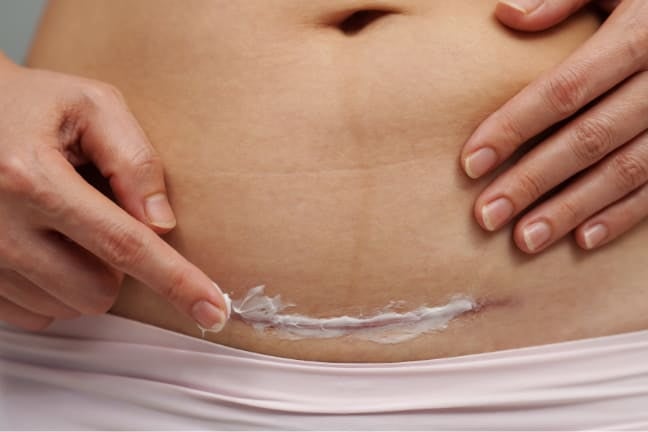
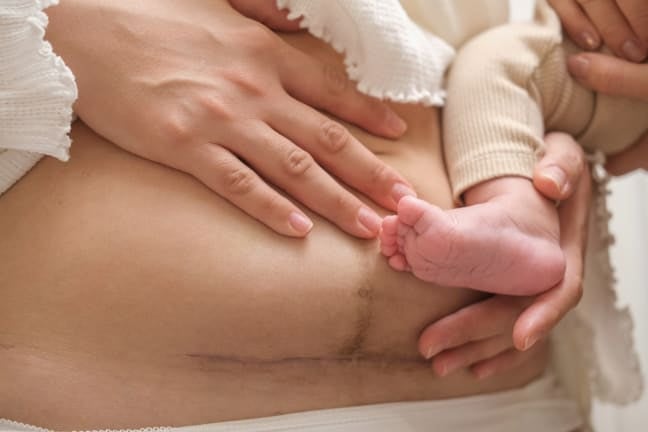
A Caesarean birth is major abdominal surgery. Although the skin incision may appear healed within a few weeks, deeper tissue healing continues for many months. Scar remodelling can continue for up to 12 months and beyond.
Early movement is important, but exercise progression should respect the ongoing healing occurring beneath the surface. Some women may experience:
- Scar sensitivity
- Tightness
- Altered sensation or numbness
- Abdominal weakness
- Changes in movement patterns
Appropriate scar mobilisation, breathing exercises and gradual strength training can all play an important role in recovery.
How to support recovery after an episiotomy or perineal tear
Most perineal wounds heal well, but healing timelines vary considerably depending on the severity of the tear.
Even after the skin has healed, deeper tissues may still be recovering and scarring can alter the behaviour of the surrounding tissue long-term.
Women may experience:
- Perineal tenderness
- Scar sensitivity
- Pelvic floor weakness
- Pain during exercise
- Pain with intercourse
A gradual return to movement and appropriate pelvic floor rehabilitation can support recovery and help rebuild confidence.
How sleep and energy levels affect exercise after birth
One topic that receives far less attention than it deserves is postpartum energy availability.
Exercise is a stress on the body.
Normally, this is beneficial. However, in the postpartum period, your body is often trying to recover from birth while simultaneously coping with broken sleep, feeding demands and increased energy expenditure. Research consistently shows that sleep deprivation affects physical performance, reaction time, recovery and injury risk.
Many new mothers are attempting to train while physiologically depleted. This means your postpartum body may respond differently to postpartum exercise than it did before pregnancy.
This can influence:
- Recovery between exercise sessions
- Tissue healing
- Injury risk
- Immune function
- Mood
- Exercise performance
Some weeks your body may tolerate progression well. Other weeks, maintaining your current activity level may be the more appropriate choice.
How postpartum hormones can affect exercise recovery and injury risk
After birth, levels of oestrogen remain lower than pre-pregnancy levels, particularly in breastfeeding mothers.
Oestrogen plays an important role in muscle recovery, tendon health and connective tissue function.
Lower oestrogen levels may contribute to:
- Joint aches
- Tendon irritation
- Reduced recovery capacity
- Vaginal dryness
- Increased tissue sensitivity
This doesn't mean women should avoid exercise while breastfeeding, but recovery and progression may require additional consideration and patience.
Is your body ready for exercise after birth? Key signs to consider
Rather than asking: "When can I run again?", Try asking: "Can my body tolerate the demands of running?"
A gradual return to impact exercise considers:
- Pelvic floor function
- Abdominal wall recovery
- Scar healing
- Sleep quality
- Energy levels
- Strength capacity in the whole body
- Tendon response to new load
- Restoring altered biomechanics and movement patterns
- Symptom response
Safe postpartum recovery: Building strength for long-term health
Exercise can be a powerful part of postpartum recovery, but recovery is not a race. Your body has spent nine months adapting to pregnancy and has experienced one of the most significant physiological events it will ever undergo.
Taking the time to rebuild strength, restore pelvic floor function, improve biomechanics, manage recovery and progress gradually is not a setback. It is the foundation for long-term health, fitness and confidence.
The 360 Mama

The 360 Mama are a team of postpartum experts who are passionate about improving the lives of mothers after pregnancy and birth. Emma, a pelvic health Physiotherapist and Pilates Instructor and Hannah, a soft tissue and scar massage therapist are both mothers themselves, and recognise the need for better support and education for modern mothers to thrive after birth.
Emma has been practising as a Chartered Physiotherapist for 15 years, with a BSc (Hons) in Physiotherapy and MSc in Sports & Exercise Medicine. Her further interest in rehabilitation and exercise led her to qualify as a Pilates Instructor with the Australian Physiotherapy & Pilates Institute, and later go on to specialise in Pre and Postnatal Pilates training. Her passion to support women through pregnancy and beyond resulted in further postgraduate training in pelvic health and she is now a qualified Mummy MOT practitioner and a member of the Pelvic, Obstetric and Gynaecological Physiotherapy professional group.
Hannah qualified with a BTEC level 5 in sports and remedial massage in 2013. Passionate about women's health she furthered her training in Pregnancy and Postnatal Massage and Abdominal Scar Massage, Scar work with the UK leading scar massage therapist and in Oncology Massage. She is also qualified in medical acupuncture. Hannah is a member of both the Complementary Health Professionals Association and a gold member of the Sports Massage Association.
Share on